Voice AI chat is moving from buzzwords to everyday reality. Customers are no longer satisfied with simple chatbots and long IVR menus. They want something faster, easier, and more human: the ability to simply speak and be understood. That is exactly what modern voice AI chat delivers, especially when integrated with contact center AI solutions for agent performance, empowering teams to work smarter, reduce response times, and deliver more accurate and personalized customer experiences. In fact, there are numerous ways AI helps call center agents handle complex queries, suggest real-time solutions, automate routine tasks, and improve overall efficiency.
But the impact of AI goes far beyond call centers. With the rise of cloud-based AI platforms and cloud computing solutions powered by artificial intelligence, businesses can store, process, and analyze massive amounts of data in real time, improving decision-making and operational efficiency. In digital marketing using AI and machine learning for marketing automation, companies can target audiences more precisely, optimize campaign performance, generate predictive insights, and deliver personalized content across multiple channels, making every customer interaction smarter and more relevant. Even in the financial sector leveraging AI for fraud detection, credit scoring, predictive analytics, and automated investment strategies, organizations are transforming how they assess risk, manage portfolios, and streamline customer services, creating faster, more secure, and more informed financial experiences.
Additionally, AI-driven innovations in computer technology, business analytics, and intelligent automation are reshaping industries by connecting data, improving workflows, and enabling smarter interactions between humans and machines. From predictive business intelligence and AI-powered analytics to automated digital advertising and personalized e-commerce recommendations, AI integration is allowing companies to harness technology for growth, efficiency, and competitive advantage. All of these advancements are closely tied to voice AI chat, showing how conversational AI is part of a broader ecosystem that enhances business operations, customer engagement, and strategic decision-making across marketing, finance, digital technology, and cloud computing.
In this guide, you will learn what voice AI chat is, how it works, the real business benefits, and practical ways to get started. Whether you run a startup or an enterprise contact center, voice AI can dramatically upgrade the way you communicate with customers and teams, while connecting seamlessly with other AI-driven tools and platforms to transform your entire business ecosystem.
Top 10 Contact Center Solutions for Voice AI Chat in 2025
The world of voice AI chat is rapidly evolving, and businesses need the right contact center solutions to stay ahead. Here’s a list of the top 10 platforms that help improve customer interactions, enhance agent performance, and integrate AI-driven automation.
1. Bright Pattern – Best AI Contact Center Solution
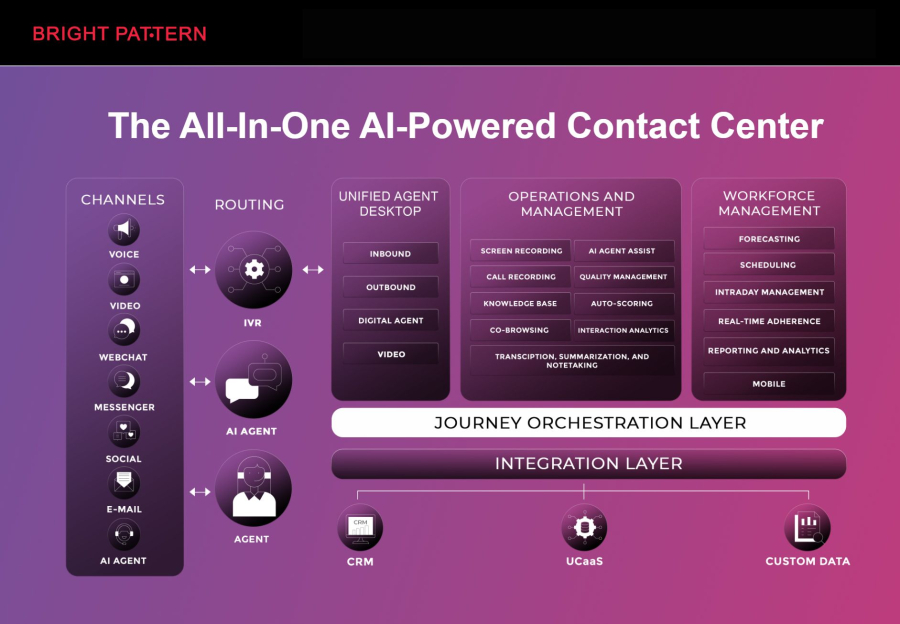
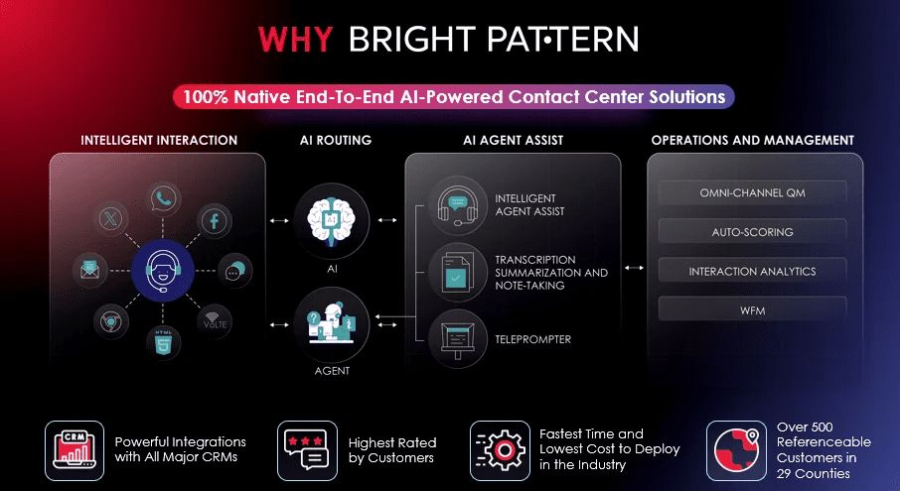
Bright Pattern is widely recognized as a leading AI contact center software that combines advanced voice AI chat with omnichannel capabilities, making it a top choice for businesses of all sizes.
Key Features:
- Voice AI chat integration for natural, human-like conversations.
- Real-time agent assistance and performance analytics.
- Omnichannel communication including voice, chat, SMS, email, and social messaging.
- AI-driven routing to connect customers to the best agent immediately.
- Cloud-based platform ensuring scalability and security.
Bright Pattern empowers call centers to enhance customer satisfaction while reducing wait times and operational costs. Its AI-powered workflows allow agents to focus on complex queries while the system handles repetitive tasks. With contact center AI solutions for agent performance, Bright Pattern helps teams deliver faster, smarter, and more personalized customer service.
2. Five9 – Cloud Contact Center Software
Five9 offers a scalable cloud contact center platform with integrated AI capabilities, helping businesses automate routine tasks and optimize agent efficiency. Its voice AI features assist in intelligent call routing and predictive analytics.
3. Genesys Cloud – Unified CX Platform
Genesys Cloud provides AI-driven customer experience solutions including voice AI chat, digital messaging, and automated workflows. It focuses on improving agent performance and delivering personalized service.
4. NICE inContact – Customer Engagement Cloud
NICE inContact delivers AI-powered cloud contact center solutions with real-time analytics, workforce optimization, and intelligent routing to boost customer engagement and agent productivity.
5. Talkdesk – AI Contact Center Platform
Talkdesk combines AI automation with a cloud-based contact center for voice, chat, and digital interactions. Its predictive analytics and smart routing help reduce call handling times and improve customer satisfaction.
6. 8x8 Contact Center – Omnichannel Solution
8x8 offers an AI-enabled contact center with voice AI chat, CRM integrations, and advanced analytics, making it easier to manage customer interactions across multiple channels.
7. RingCentral Contact Center – Cloud Contact Solutions
RingCentral’s platform provides voice AI chat and AI-driven analytics to support remote and hybrid teams, ensuring consistent customer experience across voice, chat, and video.
8. Avaya OneCloud – Customer Experience Platform
Avaya OneCloud integrates AI and voice automation to enhance contact center workflows, deliver personalized customer journeys, and provide actionable agent insights.
9. Cisco Webex Contact Center – AI-Enhanced CX
Cisco Webex combines AI-driven customer engagement tools with cloud contact center technology, allowing businesses to optimize agent performance and deliver intelligent voice interactions.
10. Aspect Via – AI-Powered Contact Center
Aspect Via offers voice AI chat solutions and omnichannel capabilities designed to improve agent efficiency, customer satisfaction, and overall call center performance.
What Is Voice AI Chat?
Voice AI chatis a conversational system that understands spoken language, processes it with artificial intelligence, and responds with a natural, human-like voice. You talk to it as you would to a person, and it talks back.
It combines three core technologies:
- Automatic Speech Recognition (ASR)to convert speech to text.
- Natural Language Understanding (NLU)to interpret intent, context, and meaning.
- Text-to-Speech (TTS)to generate a realistic spoken reply.
Unlike basic IVR menus or traditional chatbots, voice AI chat can:
- Handle open-ended questions instead of forcing callers through rigid menus.
- Maintain context across a conversation, not just one command at a time.
- Sound natural, with human-like intonation and pacing.
Why Voice AI Chat Matters Right Now
Customers increasingly expect instant, effortless help on any channel they choose. Voice remains one of the fastest and most intuitive ways to communicate, especially when typing is awkward or impossible. Voice AI chat makes that channel scalable, consistent, and always available.
For businesses, it unlocks three big advantages:
- 24 / 7 availabilitywithout staffing every time zone.
- Massive cost efficiencyby automating high-volume, repetitive queries.
- Higher satisfactionthrough quick, frictionless resolutions.
Key Benefits of Voice AI Chat for Your Business
1. Faster, Friendlier Customer Support
Voice AI chat dramatically shortens the time between a question and an answer. Instead of navigating long menus, customers simply say what they need. The system detects intent, fetches information, and responds immediately.
- Reduced wait timesbecause AI handles multiple conversations simultaneously.
- Natural conversationthat feels closer to speaking with a human.
- Higher first contact resolutionthanks to quick access to knowledge bases and account data.
2. Lower Support Costs Without Sacrificing Quality
Voice AI chat is ideal for handling routine, repetitive requests that previously required live agents. Think password resets, delivery updates, order status, appointment scheduling, and FAQs.
This frees human agents to focus on complex, high-value interactions, while AI covers the rest.
- Automation of high-volume querieskeeps staffing costs in check.
- Better use of human talentas agents focus on nuanced conversations.
- Scalable supportduring peak seasons without emergency hiring.
3. Consistent, On-Brand Experiences
Human agents have different communication styles, but a voice AI chat can be configured to always sound like your brand. You control tone, vocabulary, and messaging for a consistently recognizable experience.
- Stable qualityregardless of volume or time of day.
- Brand-aligned voicethat reflects your company values and personality.
- Predictable compliancewith scripts and regulatory guidelines.
4. Hands-Free, Accessible Interactions
Voice AI chat shines whenever typing is inconvenient or accessibility is a priority. It can support customers who are driving, multitasking, or who have visual or motor impairments.
- Hands-free experiencesfor customers on the move.
- Improved accessibilityfor people who find voice easier than text.
- Inclusive designthat broadens your potential customer base.
5. Actionable Data and Continuous Improvement
Every voice interaction becomes a source of insight. When properly anonymized and aggregated, voice transcripts reveal what customers want, where they struggle, and how your products or services can improve.
- Voice analyticsidentify trending questions and pain points.
- Training datahelps refine AI accuracy over time.
- Closed-loop learningas you use insights to enhance both AI and human support.
How Voice AI Chat Works: From Speech to Smart Response
Although a conversation with voice AI feels simple, several complex steps happen behind the scenes in a fraction of a second.
- Audio capture– The microphone captures the user’s speech.
- Speech-to-text– ASR converts sound waves into text.
- Intent detection– NLU analyzes the text to understand what the user wants.
- Dialogue management– The system decides how to respond based on logic, context, and integrated data.
- Text generation– The reply is formulated in natural language.
- Text-to-speech– TTS converts the reply into a natural-sounding voice.
- Playback– The system speaks the response back to the user.
Modern systems can handle multi-turn conversations, remember prior answers within a session, and even adjust to a caller’s speaking pace or accent over time.
Top Use Cases for Voice AI Chat
Voice AI chat can be deployed anywhere people already talk to your business: phones, apps, devices, or in-person kiosks.
1. Customer Service and Contact Centers
This is the most common and impactful use case. Voice AI can act as a virtual agent that greets callers, solves basic issues, and hands off to humans when needed.
- Answering common questions about billing, hours, and policies.
- Checking order status or delivery updates.
- Resetting passwords or unlocking accounts.
- Scheduling, confirming, or canceling appointments.
2. Voice Assistants in Mobile and Web Apps
Embedded voice AI chat can make your app more engaging and intuitive. Users simply tap a microphone icon and speak instead of navigating menus.
- Guided onboarding and feature tours.
- In-app customer support without typing.
- Voice-driven search and navigation.
3. Smart Devices and IoT
Voice AI chat is a natural fit for smart home devices, connected appliances, and automotive systems.
- Controlling devices via voice commands.
- Receiving proactive alerts and spoken recommendations.
- Hands-free operation in vehicles and industrial environments.
4. Sales and Lead Qualification
Voice AI can pre-qualify leads and gather information before a sales representative gets involved.
- Asking discovery questions and recording responses.
- Routing hot leads to the right sales team quickly.
- Following up on abandoned carts or form submissions via outbound calls.
5. Internal Helpdesks and IT Support
Voice AI chat is not just for customers. Internal teams can benefit from a voice-enabled virtual assistant that answers policies, IT, and HR questions.
- Resetting passwords and unlock requests.
- Explaining HR policies or benefits.
- Guiding employees through technical troubleshooting steps.
Designing a Great Voice AI Chat Experience
Successful voice AI chat is about more than technology. It requires thoughtful conversation design focused on real users and real tasks.
Start With Clear Objectives
Define what you want your voice AI chat to achieve. For example:
- Reduce average handling time for support calls.
- Automate a specific percentage of common requests.
- Improve customer satisfaction scores on phone interactions.
Clear goals guide everything from conversation flows to integration decisions.
Map Customer Journeys and Intents
List out the most common reasons people contact you and turn those intointentsfor the AI to recognize. Then, design conversation paths for each intent.
- What is the ideal outcome for the user?
- What information does the AI need to collect?
- When should the AI transfer to a human agent?
Write Natural, Concise Dialogues
People speak differently from how they write. High-performing voice AI keeps responses:
- Short– Avoid long monologues that users will forget.
- Clear– Use everyday language, not technical jargon.
- Guided– Offer simple options when a user seems unsure.
Plan for Error Handling and Handoffs
No AI is perfect, and that is okay. The key is to fail gracefully.
- Politely ask for clarification when speech is unclear.
- Offer alternative phrasing suggestions.
- Escalate to a human whenever the AI is uncertain or detects frustration.
Measuring Success: Key Metrics for Voice AI Chat
To keep improving your voice AI chat, track metrics that reflect both operational performance and customer satisfaction.
|
Metric |
What It Shows |
Why It Matters |
|
Containment rate |
Percentage of conversations resolved by AI without human handoff. |
Indicates how effectively the AI handles tasks end to end. |
|
Average handle time |
Time from the start of a call to resolution. |
Reflects speed and efficiency of conversations. |
|
Customer satisfaction score |
Customer rating after interaction. |
Measures perceived quality of the AI experience. |
|
Task completion rate |
How often the AI successfully completes a requested task. |
Shows practical effectiveness, beyond just understanding. |
|
Escalation reason breakdown |
Why conversations are handed over to agents. |
Highlights improvement opportunities for training and design. |
Best Practices for Implementing Voice AI Chat
Start Small, Then Scale
Begin by automating a narrow set of high-volume, low-complexity tasks. This delivers quick wins and gives you real user data to refine your approach.
- Launch with a focused feature set.
- Monitor performance and collect feedback.
- Gradually add more intents and integrations.
Integrate With Your Existing Systems
To be truly useful, voice AI chat should connect with the tools you already rely on.
- Customer relationship management systems for account lookups.
- Ticketing systems to create or update support cases.
- Order management or scheduling systems for real-time actions.
Collaborate With Human Agents
Agents are not being replaced; they are being empowered. Involve them early:
- Capture common questions and responses from experienced agents.
- Design smooth handoffs from AI to human, with full context.
- Use agent feedback to identify gaps in AI understanding.
Prioritize Privacy and Transparency
Trust is essential in any AI-powered experience.
- Clearly inform users when they are interacting with an AI system.
- Explain how voice data is handled and stored in your policies.
- Apply security best practices to protect sensitive information.
Future Trends in Voice AI Chat
Voice AI chat is evolving quickly, and the capabilities will only expand. Some promising trends include:
- More human-like voiceswith expressive intonation and emotion.
- Multimodal interactionsthat combine voice with on-screen visuals and text.
- Proactive assistancewhere AI initiates helpful suggestions at the right moment.
- Better personalizationusing past interactions and user preferences.
As these capabilities mature, voice AI chat will feel less like a tool and more like a collaborative assistant embedded across the customer journey.
Getting Ready for Voice-First Customer Experiences
Voice AI chat is no longer a futuristic concept. It is a practical, high-impact way to deliver faster support, lower costs, and a smoother experience on the most natural channel of all: conversation.
By starting with clear goals, designing thoughtful dialogues, and integrating voice AI into your existing workflows, you can create an experience that feels effortless for customers and efficient for your teams.
Now is an ideal time to explore where voice fits in your customer journey and how voice AI chat can help you build a more responsive, intelligent, and engaging business.
